Filter by
Science and Technology Leadership in American Government: Ensuring the Best P…
This report is from a study of the federal government's capacity to recruit highly qualified individuals for the top science and technology (S&T)-related leadership positions in the executive branch. The effort was supported by the Carnegie Commission on Science, Technology, and Government and by the National Research Council Fund of the Academies—National Academy of Sciences, National Academ…
- Edition
- -
- ISBN/ISSN
- 0-309-58448-5
- Collation
- 1-103
- Series Title
- -
- Call Number
- -
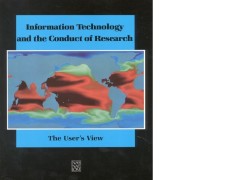
Information Technology and the Conduct of Research: The User's View
- Edition
- -
- ISBN/ISSN
- 0-309-58199-0
- Collation
- 1-88
- Series Title
- -
- Call Number
- -
- Edition
- -
- ISBN/ISSN
- 0-309-58199-0
- Collation
- 1-88
- Series Title
- -
- Call Number
- -

Who Will Do the Science of the Future?: A Symposium on Careers of Women in S…
- Edition
- -
- ISBN/ISSN
- 0-309-50170-9,
- Collation
- 1-104
- Series Title
- -
- Call Number
- -
- Edition
- -
- ISBN/ISSN
- 0-309-50170-9,
- Collation
- 1-104
- Series Title
- -
- Call Number
- -

Observations on the President's Fiscal Year 1999 Federal Science and Technolo…
- Edition
- -
- ISBN/ISSN
- 0-309-52224-2
- Collation
- 1-32
- Series Title
- -
- Call Number
- -
- Edition
- -
- ISBN/ISSN
- 0-309-52224-2
- Collation
- 1-32
- Series Title
- -
- Call Number
- -
Allocating Federal Funds for Science and Technology
- Edition
- -
- ISBN/ISSN
- 0-309-51973-X
- Collation
- 1-108
- Series Title
- -
- Call Number
- -
- Edition
- -
- ISBN/ISSN
- 0-309-51973-X
- Collation
- 1-108
- Series Title
- -
- Call Number
- -

Adviser, Teacher, Role Model, Friend: On Being a Mentor to Students in Scienc…
- Edition
- -
- ISBN/ISSN
- 0-309-59276-3,
- Collation
- -
- Series Title
- Adviser, Teacher, Role Model, Friend: On Being a Mentor to Students in Science and Engineering
- Call Number
- -
- Edition
- -
- ISBN/ISSN
- 0-309-59276-3,
- Collation
- -
- Series Title
- Adviser, Teacher, Role Model, Friend: On Being a Mentor to Students in Science and Engineering
- Call Number
- -
Science, Evolution, and Creationism
Scientific and technological advances have had profound effects on human life. In the 19th century, most families could expect to lose one or more children to disease. Today, in the United States and other developed countries, the death of a child from disease is uncommon. Every day we rely on technologies made possible through the application of scientific knowledge and processes. The com-…
- Edition
- -
- ISBN/ISSN
- 0-309-10587-0
- Collation
- 1-89
- Series Title
- -
- Call Number
- -
Facilitating Interdisciplinary Research
Interdisciplinary research (IDR) can be one of the most productive and inspiring of human pursuits—one that provides a format for conversations and connections that lead to new knowledge. As a mode of discovery and education, it has delivered much already and promises more— a sustainable environment, healthier and more prosperous lives, new dis- coveries and technologies to inspire young mi…
- Edition
- -
- ISBN/ISSN
- 978-0-309-38637-1
- Collation
- 1-333
- Series Title
- -
- Call Number
- -
Observations on the President's Fiscal Year 1999 Federal Science and Technolo…
In this report, the Committee on Science, Engineering, and Public Policy (COSEPUP) provides its observations on the federal science and technology (FS&T) portion of the president’s fiscal year (FY) 1999 submission. The FS&T budget (see box) reflects the federal investment in the creation of new knowledge and technologies and excludes such activities as the testing and evaluating of new weapon…
- Edition
- -
- ISBN/ISSN
- 0-309-52224-2
- Collation
- 1-33
- Series Title
- -
- Call Number
- -
ENHANCING THE POSTDOCTORAL EXPERIENCE FOR SCIENTISTS AND ENGINEERS
The Committee on Science, Engineering, and Public Policy (COSEPUP) has, for some time, been concerned with the many issues that surround the education and training of scientists and engineers in the United States. Its 1993 report, Science, Technology, and the Federal Government: National Goals for a New Era, emphasized the importance of human resources to the research enter- prise. A second rep…
- Edition
- -
- ISBN/ISSN
- 978-0-309-38628-9
- Collation
- 1-211
- Series Title
- -
- Call Number
- -
 Computer Science, Information & General Works
  Philosophy & Psychology
  Religion
  Social Sciences
  Language
  Pure Science
  Applied Sciences
  Art & Recreation
  Literature
  History & Geography