Psychology
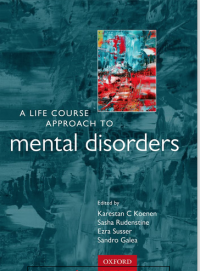
A Life Course Approach to Mental Disorders
A life course approach to mental disorders is concerned with the interplay of social and biological factors in the production and consequences of mental illness over the life span—from the prenatal period to death and across generations. As described by Drs Kuh and Ben-Shlomo in the Preface, the life course approach to mental disorders draws on two foundations: the psychological life span perspective and the developmental psychopathology perspective. A life course epidemiological approach applies these perspectives to understand the distribution, causes, and consequences of mental disorders in human populations. Life course epidemiology is inherently interdisciplinary, drawing on expertise from fields ranging from basic neuroscience to sociology. However, the focus on populations and implications for public health and prevention distinguishes the life course epidemiology of mental disorders from other fields interested in similar questions, such as developmental psychology and child psychiatry.
Research on the life course epidemiology of mental disorders has long historical roots, exem- plified by the study of the Dutch Hunger Winter published in the 1970s.1 In the past twenty years, however, we have seen an explosion in research on the life course epidemiology of mental disorders motivated by three factors. The first is the ageing into adulthood of numerous birth cohorts.2 Research grounded in these cohorts has provided increasing evidence that mental dis- orders previously perceived to emerge in adulthood have their origins early in life. For example, periconceptional exposure to famine has been strongly linked to schizophrenia (see Chapter 6), and reports also suggest that prenatal famine may be linked to mood disorder (see Chapter 8) and antisocial personality disorder (see Chapter 15).1,3–8 Early childhood factors, such as childhood adversity, have been linked to new onsets of mental disorders throughout the life course.9 Data from prospective birth cohorts have documented that new onsets of mental disorders in adult- hood are, in fact, the exception. When careful prospective assessments are available, it appears that the majority of adults with mental disorders will have had a mental disorder by age 15 years.10
Availability
No copy data
Detail Information
- Series Title
-
A Life Course Approach to Mental Disorders
- Call Number
-
-
- Publisher
- United Kingdom : Oxford University Press Inc., 2014
- Collation
-
1-337
- Language
-
English
- ISBN/ISSN
-
9780199656516
- Classification
-
NONE
- Content Type
-
-
- Media Type
-
-
- Carrier Type
-
-
- Edition
-
1st Edtion
- Subject(s)
- Specific Detail Info
-
-
- Statement of Responsibility
-
-
Other version/related
No other version available
File Attachment
Comments
You must be logged in to post a comment
 Computer Science, Information & General Works
  Philosophy & Psychology
  Religion
  Social Sciences
  Language
  Pure Science
  Applied Sciences
  Art & Recreation
  Literature
  History & Geography