Psychology
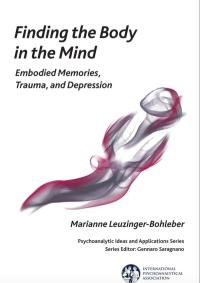
FINDING THE BODY IN THE MIND
Freud is not dead. Far from it. In the year of the 150th anniversary of his birth we can truly say that his ideas are undergoing a renaissance. Freud is everywhere. And especially in neuroscience, we are taking a new look at his work and concluding that it is “still the most coherent and intellectually satisfying view of the mind” (Kandel, 1998) that we have. (Mark Solms, 2006, last page)
It is interesting from the perspective of the history and sociology of science that, since the 1990s, many different scientific disciplines have intensified their interest of the so called “mind-body-problem”: psychoanalysis, philosophy, academic psychology, cognitive science, and modern neurosciences. In cognitive science, for example, twenty years ago a kind of revolution took place: from the “classical to embodied cognitive science”.1 The conceptualisation of how the mind works has changed completely and, as will be shown in this publica- tion, has great implications for clinical psychoanalytical practice as well as for theorising in contemporary psychoanalysis. The question of how unrepresented, unconscious meanings can be discovered, remembered, and worked through is and has been Freud is not dead. Far from it. In the year of the 150th anniversary of his birth we can truly say that his ideas are undergoing a renaissance. Freud is everywhere. And especially in neuroscience, we are taking a new look at his work and concluding that it is “still the most coherent and intellectually satisfying view of the mind” (Kandel, 1998) that we have. (Mark Solms, 2006, last page)
It is interesting from the perspective of the history and sociology of science that, since the 1990s, many different scientific disciplines have intensified their interest of the so called “mind-body-problem”: psychoanalysis, philosophy, academic psychology, cognitive science, and modern neurosciences. In cognitive science, for example, twenty years ago a kind of revolution took place: from the “classical to embodied cognitive science”.1 The conceptualisation of how the mind works has changed completely and, as will be shown in this publica- tion, has great implications for clinical psychoanalytical practice as well as for theorising in contemporary psychoanalysis. The question of how unrepresented, unconscious meanings can be discovered, remembered, and worked through is and has been one of the central topics of psychoanalysis (see, for example, Levine et al., 2013).
In 2006, which had been declared as “the Year of Freud”, one could easily obtain the impression that the dialogue between psychoanalysis and the neurosciences was the most important window, opening modern day psychoanalysis to the world of contemporary scientific discourses. Can we, as psychoanalysts, really get into a fruitful dialogue with neuroscientists and gain additional knowledge of the unconscious, psychoanalysis’ specific research object?
Availability
No copy data
Detail Information
- Series Title
-
FINDING THE BODY IN THE MIND
- Call Number
-
-
- Publisher
- Great Britain : Karnac Books Ltd., 2015
- Collation
-
1-321
- Language
-
English
- ISBN/ISSN
-
978 1 78220 209 7
- Classification
-
NONE
- Content Type
-
-
- Media Type
-
-
- Carrier Type
-
-
- Edition
-
1st Edtion
- Subject(s)
- Specific Detail Info
-
-
- Statement of Responsibility
-
-
Other version/related
No other version available
File Attachment
Comments
You must be logged in to post a comment
 Computer Science, Information & General Works
  Philosophy & Psychology
  Religion
  Social Sciences
  Language
  Pure Science
  Applied Sciences
  Art & Recreation
  Literature
  History & Geography