Economics
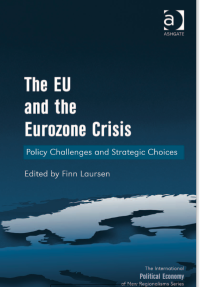
The EU and The Eurozone Crisis
The European Union (EU) is facing a fundamental crisis, which especially affects the countries that take part in the single currency, the euro. The group is usually referred to as the eurozone, and when the ministers of finance from these countries meet they are referred to as the Euro Group. This group has its own president, currently Jean-Claude Juncker from Luxembourg. It can be seen as a subgroup of the Economic and Financial Affairs Council (ECOFIN) of the Council of the EU. The current 17 members of the eurozone are Austria, Belgium, Cyprus, Estonia, Finland, France, Germany, Greece, Ireland, Italy, Luxembourg, Malta, the Netherlands, Portugal, Slovakia, Slovenia and Spain. It means that there are 10 member states of the EU which are not members of the eurozone, namely Bulgaria, the Czech Republic, Denmark, Hungary, Latvia, Lithuania, Poland, Romania, Sweden and the United Kingdom. This kind of situation, where not all member states take part in a certain policy, in this case Economic and Monetary Union (EMU), has been referred to by many names, such as ‘flexibility’ or ‘variable geometry’. Assuming that those which are ‘out’ will eventually join those which are ‘in’, it can also be seen as two-speed or multispeed integration. The literature on European integration is full of discussions about the pros and cons of flexibility (e.g. CEPR 1995; Stubb 2002a, 2002b). In the academic literature it is also sometimes referred to as ‘differentiated integration’ (Kölliker 2006).
At the outset of European integration in the 1950s the idea was that all member states should take part in all common policies and institutions. New member states were expected to accept all existing rules, treaties and legislation, known as the acquis communautaire. No permanent exceptions were on offer, only transition periods of varying lengths
Availability
No copy data
Detail Information
- Series Title
-
The EU and The Eurozone Crisis
- Call Number
-
-
- Publisher
- England : ashgate Publishing Limited., 2013
- Collation
-
1-242
- Language
-
English
- ISBN/ISSN
-
9781472408174
- Classification
-
NONE
- Content Type
-
-
- Media Type
-
-
- Carrier Type
-
-
- Edition
-
1st Edtion
- Subject(s)
- Specific Detail Info
-
-
- Statement of Responsibility
-
-
Other version/related
No other version available
File Attachment
Comments
You must be logged in to post a comment
 Computer Science, Information & General Works
  Philosophy & Psychology
  Religion
  Social Sciences
  Language
  Pure Science
  Applied Sciences
  Art & Recreation
  Literature
  History & Geography