Management
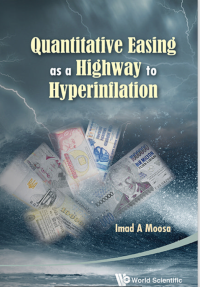
Quantitative easing as a highway to hyperinflation
In the aftermath of the global financial crisis, the European crisis and the recessions associated with these crises, one tends to think that the risk of deflation is greater than the risk of inflation as things stand at the end of 2012. This is a valid argument insofar as demand-pull factors and cost-push factors are associated with economic booms, when there is unutilized capacity in the economy. However, hyperinflation tends to be associated with economic depression — hence, it cannot be ruled out even at the current levels of unemployment and spare capacity. There are indeed more reasons to believe that hyperinflation, rather than deflation, is forthcoming, particularly in the U.S. where quantitative easing has been pursued vigorously and intensified significantly in December 2012.
Hyperinflation is basically a fiscal phenomenon resulting from fiscal recklessness and the tendency to make up for this recklessness by monetizing the deficit — that is, by printing money to finance the deficit. This is what quantitative easing is all about, although some economists argue that it is benign because it does not involve direct buying of government bonds by the central bank from the Treasury. While most major countries have acute fiscal problems and have resorted to quantitative easing, the U.S. is in a more vulnerable position for at least two reasons. The first is that the extent of quantitative easing in the U.S. is far greater than in other countries, as indicated by the available statistics on monetary aggregates. The second is that there are indications that the U.S. dollar is gradually losing its international status, which will force more and more money printing as the U.S. Treasury finds it increasingly difficult to borrow from abroad. It is actually a vicious circle whereby money printing leads to a loss of confidence in the dollar and the loss of confidence leads to more printing.
Availability
No copy data
Detail Information
- Series Title
-
Quantitative easing as a highway to hyperinflation
- Call Number
-
-
- Publisher
- USA : World Scientific Publishing Co. Pte. Ltd.., 2014
- Collation
-
1-377
- Language
-
English
- ISBN/ISSN
-
978-9814504911
- Classification
-
NONE
- Content Type
-
-
- Media Type
-
-
- Carrier Type
-
-
- Edition
-
1st Edtion
- Subject(s)
- Specific Detail Info
-
-
- Statement of Responsibility
-
-
Other version/related
No other version available
File Attachment
Comments
You must be logged in to post a comment
 Computer Science, Information & General Works
  Philosophy & Psychology
  Religion
  Social Sciences
  Language
  Pure Science
  Applied Sciences
  Art & Recreation
  Literature
  History & Geography