Management
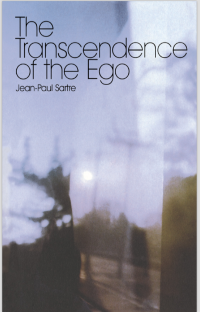
The Transcendence of the Ego
Jean-Paul Sartre’s The Transcendence of the Ego (hereafter TE) first appeared as an article in the French academic journal, Recherches Philosophiques in 1937. It was among Sartre’s first philosophical publications, the outcome of a period of intense critical engagement with the phenomenological philosophy of Edmund Husserl (1859–1938). Sartre had become interested in phenomenology earlier in the 1930s and devoted much of the year (1933/4) that he spent as a scholar in the French Institute in Berlin to a close study of Husserl’s writings. At the time, the publication of TE was an event of minor significance, making available to an academic franco-phone readership a brief contribution by a young school-teacher to a debate which (although its topic—the self—was of central philosophical importance) was conducted here within the esoteric idiom of phenomenology.
From today’s standpoint, the historical importance of TE massively compounds its inherent philosophical interest, and this excellent new translation by Andrew Brown provides a welcome opportunity to re-examine it. TE demonstrates the presence in Sartre’s thinking from its earliest stage of ideas which, although not yet consciously entertained as such, were to become central tenets within his existentialist philosophy. Sartre’s hostility to a conception of the self as an ‘inner’ entity at the core of individual human beings, playing an explanatory role in relation to their experience, is clearly conveyed in TE, along with his rejection of any psychology that trades on such a conception. Sartre’s own conception of consciousness as ‘absolute’, insubstantial, and transparent is also voiced here, and his negative attitude towards Freudian psychoanalysis, based on its denial of these features, is briefly expressed.
TE also provides the first instance in print of Sartre’s attempt to define his relationship with one of his most important early interlocutors, Husserl. Recollecting, a few years later, the period in the early 1930s when he immersed himself in Husserl’s phenomenological writings, Sartre wrote in his War Diaries that before he could move on to study Martin Heidegger’s philosophy, he had first to exhaust Husserl’s thinking. ‘For me, moreover, to exhaust a philosophy is to reflect within its perspectives, and create my own private ideas at its expense, until I plunge into a blind alley’ (Sartre 1984, pp. 183–4)
Availability
No copy data
Detail Information
- Series Title
-
The Transcendence of the Ego
- Call Number
-
-
- Publisher
- USA : Routledge., 2004
- Collation
-
1-63
- Language
-
English
- ISBN/ISSN
-
0-203-69436-8
- Classification
-
NONE
- Content Type
-
-
- Media Type
-
-
- Carrier Type
-
-
- Edition
-
1st Edtion
- Subject(s)
- Specific Detail Info
-
-
- Statement of Responsibility
-
-
Other version/related
No other version available
File Attachment
Comments
You must be logged in to post a comment
 Computer Science, Information & General Works
  Philosophy & Psychology
  Religion
  Social Sciences
  Language
  Pure Science
  Applied Sciences
  Art & Recreation
  Literature
  History & Geography