Management
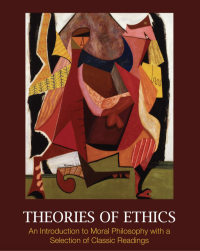
Theories of Ethics
This is a book about ethics, about right and wrong, and about good and bad in human life. But can we really tell moral right from wrong? Morality, many people think, is not like sci- ence, which deals in facts, but a matter of values, about which we can only have personal opinions. According to this point of view, there aren’t any moral facts, and this explains why people disagree so much over ethical questions. While science is objective, morality is essentially subjective.
This is a common view of ethics. It is also an ancient one. Indeed, moral philosophy as an intellectual inquiry may be said to have its origins in a debate about the truth or falsehood of this very idea. The subjectivity or objectivity of morality provides the focus for the earli- est complete works of philosophy—Plato’s dialogues. In several of these dialogues, Plato constructs dramatic conversations between his teacher, Socrates, and various figures well known in ancient Athens. Many of these people were called “Sophists,” a group of think- ers who held that there is a radical difference between the world of facts and the world of values, between physis and nomos, to use the Greek words, the difference being that when it comes to matters of value, the concepts of true and false have no meaningful application. By implication, then, in ethics there is no scope for proof and demonstration as there is in science and mathematics; ethical “argument” is a matter of rhetoric, which is to say, a matter of persuading people to believe what you believe rather than proving to them that the beliefs you hold are true.
We know relatively little about the historical Socrates outside the pages of Plato’s dialogues, but it seems likely that Plato represented his famous teacher accurately when he portrayed him as arguing vigorously against the Sophists. Certainly, whatever about Socrates, Plato himself believed and argued with great subtlety that there are indeed right and wrong answers about good and bad, and that we can use our powers of reasoning to discover what these are. He further believed that it takes a certain measure of expertise to get the answers right, and that philosophy plays an important part in acquiring that expertise.
One way of describing the issue between Socrates (or Plato) and the Sophists is to say that it is a disagreement about the objectivity of morality. While the Sophists believed that good and bad and right and wrong reflect subjective opinion and desire—how we as human beings and as individuals feel about things—Plato and Socrates believed that good and bad and right and wrong are part of the objective nature of things
Availability
No copy data
Detail Information
- Series Title
-
Theories of Ethics
- Call Number
-
-
- Publisher
- London : Routledge., 2011
- Collation
-
1-401
- Language
-
English
- ISBN/ISSN
-
0-203-83512-3
- Classification
-
NONE
- Content Type
-
-
- Media Type
-
-
- Carrier Type
-
-
- Edition
-
1st Edtion
- Subject(s)
- Specific Detail Info
-
-
- Statement of Responsibility
-
-
Other version/related
No other version available
File Attachment
Comments
You must be logged in to post a comment
 Computer Science, Information & General Works
  Philosophy & Psychology
  Religion
  Social Sciences
  Language
  Pure Science
  Applied Sciences
  Art & Recreation
  Literature
  History & Geography