Filter by
Emergent Literacy Children’s books from 0 to 3
- Edition
- -
- ISBN/ISSN
- 978 90 272 8323 8
- Collation
- -
- Series Title
- -
- Call Number
- -
- Edition
- -
- ISBN/ISSN
- 978 90 272 8323 8
- Collation
- -
- Series Title
- -
- Call Number
- -

Emergencies in Mental Health Nursing
- Edition
- -
- ISBN/ISSN
- 978–0–19–956141–4
- Collation
- -
- Series Title
- -
- Call Number
- -
- Edition
- -
- ISBN/ISSN
- 978–0–19–956141–4
- Collation
- -
- Series Title
- -
- Call Number
- -
Professional Oracle® Programming
Professional Oracle Programming is intended for application developers who use Oracle as their database. As such, this book does not devote much space to topics which are primarily of interest to database administrators, such as backup and recovery. Most importantly, this book is designed to help a programmer understand the database issues that can have a direct impact on the operation and perf…
- Edition
- -
- ISBN/ISSN
- 978-076-457482-5
- Collation
- 1-793
- Series Title
- -
- Call Number
- -
PROFESSIONAL Sitecore® Development
RECENT YEARS HAVE SEEN DRAMATIC EXPANSION in the use of mobile computing and social media on the Internet. Organizations show increasing interest in web analytics, and will soon comprehend the importance of engagement and experience management and monitoring. With the increasing value of Search Engine Optimization (SEO) and the nature of the web as a crucial channel for customer service, sales,…
- Edition
- -
- ISBN/ISSN
- 978-1-118-25997-9
- Collation
- 1-556
- Series Title
- -
- Call Number
- -
XMPP Programming with Javascript® and jQuery
XMPP Powers a w Ide range of applications including instant messaging, multi-user chat, voice and video conferencing, collaborative spaces, real-time gaming, data synchronization, and even search. Although XMPP started its life as an open, standardized alternative to proprietary instant messaging systems like ICQ and AOL Instant Messenger, it has matured into an extremely robust protocol for al…
- Edition
- -
- ISBN/ISSN
- 978-0-470-54071-8
- Collation
- 1-484
- Series Title
- -
- Call Number
- -

Effective Programs for Treating Autism Spectrum Disorder Applied Behavior Ana…
- Edition
- -
- ISBN/ISSN
- 13: 978–0–203–85503–
- Collation
- -
- Series Title
- -
- Call Number
- -
- Edition
- -
- ISBN/ISSN
- 13: 978–0–203–85503–
- Collation
- -
- Series Title
- -
- Call Number
- -
Programming Abstractions in C++
This course reader has had an interesting evolutionary history that in some ways mirrors the genesis of the C++ language itself. Just as Bjarne Stroustup’s first version of C++ was implemented on top of a C language base, this reader began its life as Eric Roberts’s textbook Programming Abstractions in C (Addison-Wesley, 1998). In 2002-03, Julie Zelenski updated it for use with the C++ pr…
- Edition
- -
- ISBN/ISSN
- -
- Collation
- 1-682
- Series Title
- -
- Call Number
- -
Programming ASP.NET AJAX
This book is about ASP.NET AJAX (known in prerelease versions as “Atlas”), a collection of new Microsoft technologies that enables web developers—particularly ASP.NET 2.0 developers—to more easily create web sites with pages that use Ajax. Ajax-style pages provide a richer user interface. Such a page is also more responsive because it can respond immediately to users, and can interact m…
- Edition
- -
- ISBN/ISSN
- 978-0-596-51424-2
- Collation
- 1-475
- Series Title
- -
- Call Number
- -
Programming ASP.NET MVC 4
The web application landscape is vast and varied. Microsoft’s ASP.NET Framework— built on top of the mature and robust .NET Framework—is one of the most trusted platforms in the industry. ASP.NET MVC is Microsoft’s latest addition to the world of ASP.NET providing web developers with an alternative development approach that helps you build web applications with ease. The main goal of th…
- Edition
- -
- ISBN/ISSN
- 978-1-449-32031-7
- Collation
- 1-492
- Series Title
- -
- Call Number
- -
Programming C# 3.0
On top of the .NET infrastructure sits a high-level abstraction of the operating system, designed to facilitate object-oriented software development. This top tier includes ASP.NET and Windows applications. ASP.NET (with AJAX) is one of the world’s most popular ways to create web applications. Although C# is a standalone programming language, it is my premise that the vast majority of the rea…
- Edition
- -
- ISBN/ISSN
- 978-0-596-52743-3
- Collation
- 1-609
- Series Title
- -
- Call Number
- -
Programming C# 4.0
Microsoft unveiled the .NET Framework in 2000, and in the decade that followed, it became an extremely popular choice for developing software for Windows. While .NET supports many programming languages, it is most strongly associated with the language designed specifically for the platform: C#. C# has grown considerably since its launch. Each new version enabled new program- ming techniques—C…
- Edition
- -
- ISBN/ISSN
- 978-0-596-15983-2
- Collation
- 1-857
- Series Title
- -
- Call Number
- -
Programming C# 5.0
The C# programming language (pronounced ‘see sharp’) can be used for many kinds of applications, including web sites, desktop applications, games, phone apps, and command line utilities. C# has been center stage for Windows developers for about a decade now, so when Microsoft announced that Windows 8 would introduce a new1 style of application, optimized for touch-based interaction on table…
- Edition
- -
- ISBN/ISSN
- -
- Collation
- 1-286
- Series Title
- -
- Call Number
- -
Programming Clojure
Clojure is a dynamic programming language for the Java Virtual Machine (JVM), with a compelling combination of features: • Clojure is elegant. Clojure’s clean, careful design lets you write programs that get right to the essence of a problem, without a lot of clutter and ceremony. • Clojure is Lisp reloaded. Clojure has the power inherent in Lisp but is not constrained by the history of…
- Edition
- -
- ISBN/ISSN
- 978-1-934356-86-9
- Collation
- 1-284
- Series Title
- -
- Call Number
- -
Programming Clojure
We will begin this chapter by briefly exploring the features that make Clojure compelling: • Elegant, expressive code • Lisp’s powerful notion that code is data • Easy, fast Java interoperability • A sequence library that unifies all kinds of data • Functional programming to encourage reusable, correct code • Concurrency without the pain of manual lock management This list of …
- Edition
- -
- ISBN/ISSN
- 978-1-934356-33-3
- Collation
- 1-297
- Series Title
- -
- Call Number
- -

Behavioral Neurobiology of Stress-related Disorders
- Edition
- -
- ISBN/ISSN
- 978-3-662-45126-7
- Collation
- -
- Series Title
- -
- Call Number
- -
- Edition
- -
- ISBN/ISSN
- 978-3-662-45126-7
- Collation
- -
- Series Title
- -
- Call Number
- -

ADOLESCENT MEDICINE: STATE OF THE ART REVIEWS Current Psychopharmacology for …
- Edition
- -
- ISBN/ISSN
- -
- Collation
- -
- Series Title
- -
- Call Number
- -
- Edition
- -
- ISBN/ISSN
- -
- Collation
- -
- Series Title
- -
- Call Number
- -
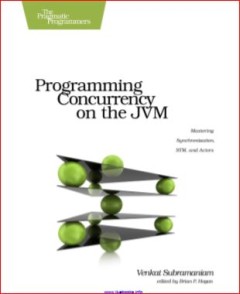
Programming Concurrency on the JVM
You’ve promised the boss that you’ll turn the new powerful multicore pro- cessor into a blazingly fast workhorse for your application. You’d love to exploit the power on hand and beat your competition with a faster, responsive application that provides great user experience. Those gleeful thoughts are interrupted by your colleague’s cry for help—he’s run into yet another syn- chroni…
- Edition
- -
- ISBN/ISSN
- 978-1-934356-76-0
- Collation
- 1-282
- Series Title
- -
- Call Number
- -
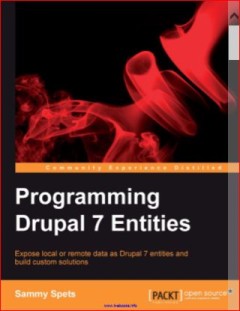
Programming Drupal 7 Entities
Developing Drupal code has always been interesting and fun because the APIs change a lot between Drupal releases. Other CMS platforms have adopted a more static API approach, resulting in a much slower innovations. One such Drupal innovation has been the entity paradigm that simplified data manipulation. This enabled developers to build more powerful solutions and liberate their brains to remem…
- Edition
- -
- ISBN/ISSN
- 978-1-78216-652-8
- Collation
- 1-134
- Series Title
- -
- Call Number
- -
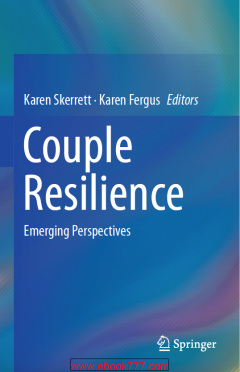
Couple Resilience Emerging Perspectives
- Edition
- -
- ISBN/ISSN
- 978-94-017-9909-6
- Collation
- -
- Series Title
- -
- Call Number
- -
- Edition
- -
- ISBN/ISSN
- 978-94-017-9909-6
- Collation
- -
- Series Title
- -
- Call Number
- -
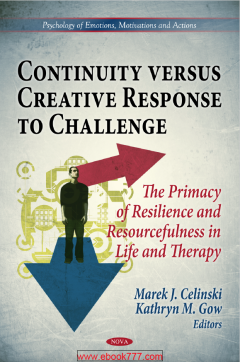
CONTINUITY VERSUS CREATIVE RESPONSE TO CHALLENGE: THE PRIMACY OF RESILIENCE A…
- Edition
- -
- ISBN/ISSN
- 978-1-61942-707-5
- Collation
- -
- Series Title
- -
- Call Number
- -
- Edition
- -
- ISBN/ISSN
- 978-1-61942-707-5
- Collation
- -
- Series Title
- -
- Call Number
- -

CONTEMPORARY INTELLECTUAL ASSESSMENT THIRD EDITION Theories, Tests, and Issues
- Edition
- -
- ISBN/ISSN
- 978-1-60918-995-2
- Collation
- -
- Series Title
- -
- Call Number
- -
- Edition
- -
- ISBN/ISSN
- 978-1-60918-995-2
- Collation
- -
- Series Title
- -
- Call Number
- -
c o g n i t i v e - b e h a v i o r a I Group t h e r a p y FOR SPECIFIC PROB…
- Edition
- -
- ISBN/ISSN
- -
- Collation
- -
- Series Title
- -
- Call Number
- -
- Edition
- -
- ISBN/ISSN
- -
- Collation
- -
- Series Title
- -
- Call Number
- -
The Future Home is Wise, Not Smart A Human-Centric Perspective on Next Genera…
- Edition
- -
- ISBN/ISSN
- 978-3-319-23093-1
- Collation
- -
- Series Title
- -
- Call Number
- -
- Edition
- -
- ISBN/ISSN
- 978-3-319-23093-1
- Collation
- -
- Series Title
- -
- Call Number
- -

Communal Functions of Social Comparison
- Edition
- -
- ISBN/ISSN
- 978-0-521-11949-8
- Collation
- -
- Series Title
- -
- Call Number
- -
- Edition
- -
- ISBN/ISSN
- 978-0-521-11949-8
- Collation
- -
- Series Title
- -
- Call Number
- -

Cognitive Therapy for Personality Disorders
- Edition
- -
- ISBN/ISSN
- 978–0–415–41557–6
- Collation
- -
- Series Title
- -
- Call Number
- -
- Edition
- -
- ISBN/ISSN
- 978–0–415–41557–6
- Collation
- -
- Series Title
- -
- Call Number
- -
Cognitive Linguistics Convergence and Expansion
- Edition
- -
- ISBN/ISSN
- 978 90 272 8454 9
- Collation
- -
- Series Title
- -
- Call Number
- -
- Edition
- -
- ISBN/ISSN
- 978 90 272 8454 9
- Collation
- -
- Series Title
- -
- Call Number
- -

Programming Erlang
Oh no! Not another programming language! Do I have to learn yet another one? Aren’t there enough already? I can understand your reaction. There are loads of programming languages, so why should you learn another? Here are five reasons why you should learn Erlang: • You want to write programs that run faster when you run them on a multicore computer. • You want to write fault-tolerant …
- Edition
- -
- ISBN/ISSN
- 978-1-934356-00-5
- Collation
- 1-526
- Series Title
- -
- Call Number
- -
Programming F# 3.0
So what actually is F#? In a nutshell, F# is a multi-paradigm programming language built on .NET, meaning that it supports several different styles of programming natively. I’ll spare you the history of the language and instead just go over the big bullets: • F# supports imperative programming. In F# you can modify the contents of memory, read and write files, send data over the network, an…
- Edition
- -
- ISBN/ISSN
- -
- Collation
- 1-383
- Series Title
- -
- Call Number
- -
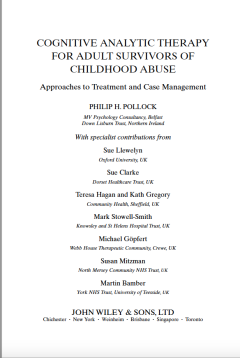
COGNITIVE ANALYTIC THERAPY FOR ADULT SURVIVORS OF CHILDHOOD ABUSE
- Edition
- -
- ISBN/ISSN
- 0-471-49160-8
- Collation
- -
- Series Title
- -
- Call Number
- -
- Edition
- -
- ISBN/ISSN
- 0-471-49160-8
- Collation
- -
- Series Title
- -
- Call Number
- -
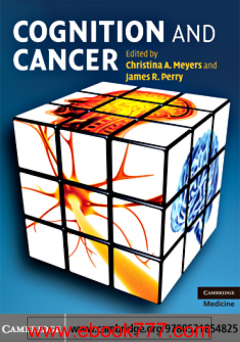
Cognition and Cancer
- Edition
- -
- ISBN/ISSN
- 978-0-511-45573-5
- Collation
- -
- Series Title
- -
- Call Number
- -
- Edition
- -
- ISBN/ISSN
- 978-0-511-45573-5
- Collation
- -
- Series Title
- -
- Call Number
- -
 Computer Science, Information & General Works
  Philosophy & Psychology
  Religion
  Social Sciences
  Language
  Pure Science
  Applied Sciences
  Art & Recreation
  Literature
  History & Geography